

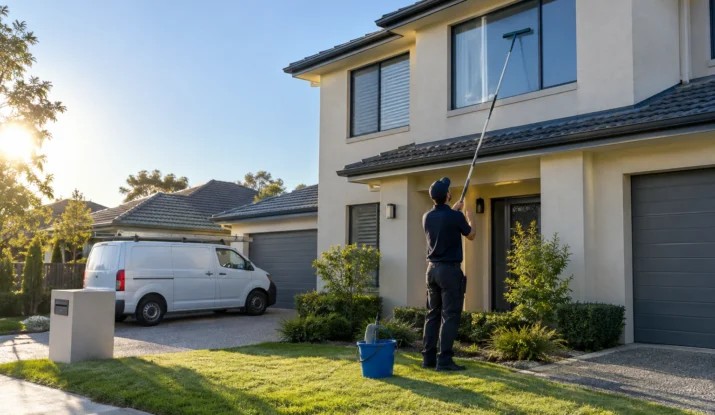
DIY vs Professional Window Cleaning: Cost, Safety and Results Compared
Streaky glass, a wobbly ladder and a Saturday gone: is DIY window cleaning really worth it? This guide compares DIY vs professional window cleaning on cost, safety and results, so you can choose with confidence.
The short answer depends on your home, your budget and how high your windows sit. Read on for honest numbers, a step-by-step DIY method and a decision checklist.
Table of Contents
- Quick Verdict: DIY or Professional?
- Cost Comparison: What You Really Pay
- Safety: The Risks of Cleaning Windows Yourself
- Results: Streaks, Clarity and Longevity
- Time, Effort and Convenience
- How to Clean Windows Yourself (Step-by-Step)
- How to Choose a Professional Window Cleaner
- The Hybrid Approach
- Decision Checklist: Which Option Is Right for You?
- Conclusion
Quick Verdict: DIY or Professional?
Hire a professional if you have a double-storey home, large or hard-to-reach glass, or you want a consistently streak-free finish. DIY makes sense for a small, single-storey home where you have the time and enjoy the task.
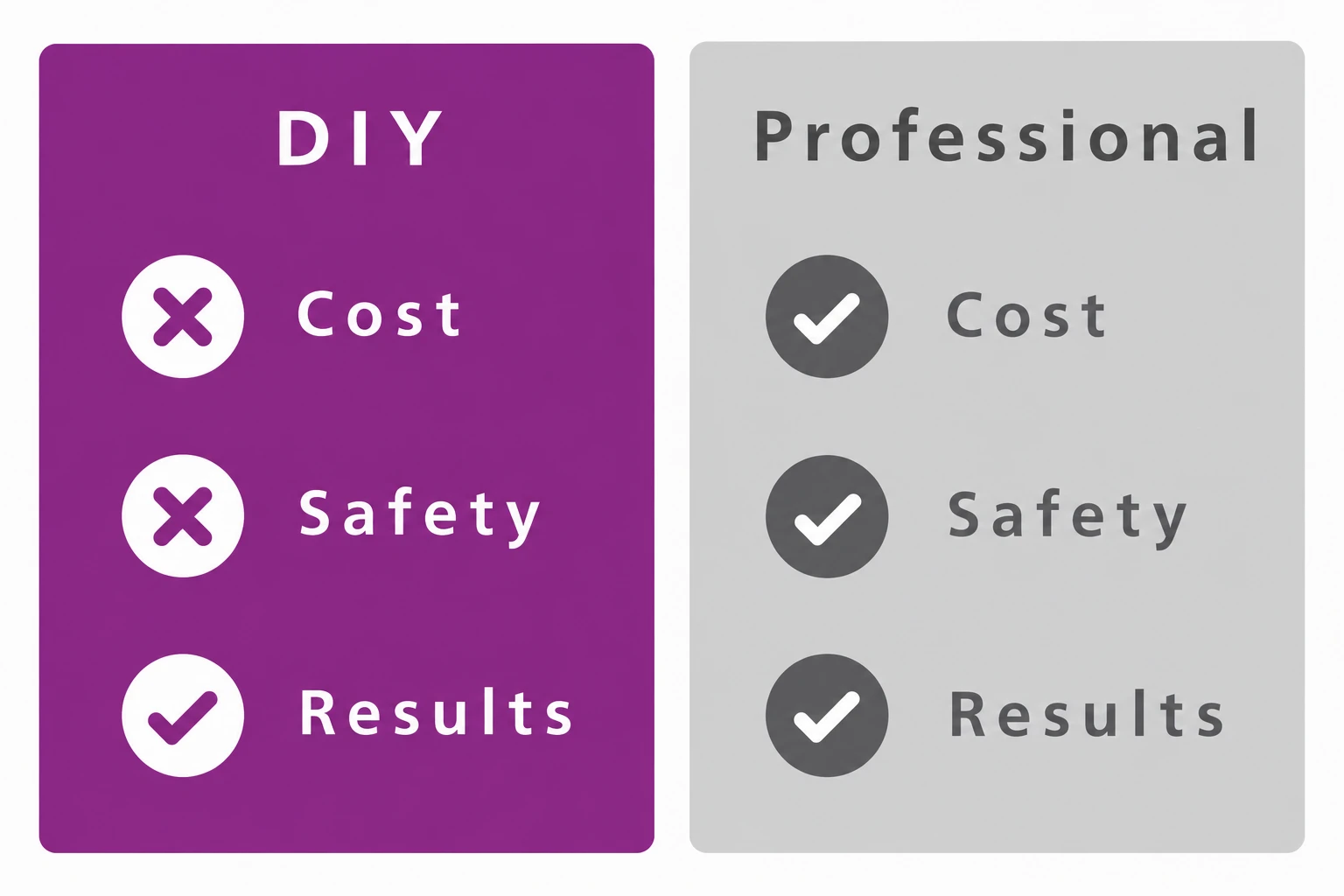
| Factor | DIY | Professional |
|---|---|---|
| Upfront cost | Low (tools and supplies) | None; pay per clean |
| Ongoing cost | Low, but your time is not free | Higher per clean |
| Safety | Higher risk above ground level | Trained, insured, tagged equipment |
| Results | Good with the right technique | Streak-free, consistent |
| Time | Several hours | Often an hour or two of your day saved |
| Convenience | You organise everything | Book once, done |
Who Should DIY and Who Should Hire
DIY suits small homes, ground-floor windows and people with spare weekends. Professionals suit busy households, multi-storey properties, shopfronts and anyone who wants peace of mind.
Key takeaway: If a ladder is needed to reach it, hire it out. Use the decision checklist below to confirm.
Cost Comparison: What You Really Pay
Is DIY window cleaning cheaper than hiring a pro? On paper, yes. In practice, the gap is smaller than most people expect once you count your time and tools.
Professional Window Cleaning Prices
Professional pricing usually follows either a per-window rate or a flat rate based on the size of the home and number of storeys. Per-window pricing suits small jobs. Flat rates suit whole-home cleans and are easier to budget.
Prices vary by city, access and window type, so treat any figure as an estimate. As a rough guide, many Australian homes fall somewhere between $150 and $450 for an exterior and interior clean, depending on size and storeys, based on typical quotes from Australian providers. For an exact figure, use our free cost calculator or residential quote form. Both are free and no obligation.
DIY Startup and Ongoing Costs
A decent kit includes a squeegee, scrubber, bucket, microfibre cloths and an extension pole. Expect to spend roughly $60 to $150 to start, with small refills each year, based on common retail prices for window cleaning kits.
Break-Even Point: When DIY Stops Saving Money
Here is a worked example using illustrative figures. Say a professional clean costs $300 and you book twice a year: $600 annually. A DIY kit costs $100, plus $20 a year in supplies. Cleaning twice takes about 6 hours each time, so 12 hours in total.
| Approach | Cash cost (year 1) | Your time |
|---|---|---|
| Professional | $600 | About 0 hours |
| DIY | $120 | About 12 hours |
You save $480, but that works out to about $40 per hour for your effort. If your time is worth more than that, or you dislike ladders, hiring wins.
Hidden Costs
Watch for replacement blades, scratched glass from dirty tools, damaged flyscreens and, most seriously, injury. These rarely appear in a DIY budget.
Safety: The Risks of Cleaning Windows Yourself
Is it dangerous to clean windows yourself? At ground level, rarely. Above it, falls from ladders are a well-known cause of household injury, and workplace safety bodies such as Safe Work Australia treat working at heights as a major hazard.
Ladder Falls and Upper-Storey Risks
If you do use a ladder, follow the basics:
- Place it on firm, level ground.
- Keep three points of contact at all times.
- Never overreach; move the ladder instead.
- Never use a ladder in wind, rain or alone.
Never DIY: Skip any window that needs a ladder above the first storey, any roof access, skylights, or glass you cannot reach safely with both feet on the ground.
How Professionals Mitigate Risk
Trained teams use compliant, tagged safety equipment, set work procedures and reach systems that keep feet on the ground wherever possible. At HiRange, our team is background-checked, trained and fully insured.
Insurance and Liability
If you hire a provider, ask for proof of public liability insurance. If you are injured at home during a DIY job, you carry the cost yourself. If a professional is insured and damages something, the claim is theirs to handle.
Safer DIY Alternatives
Use an extension pole for higher panes, and clean upper-floor windows from inside only. Leave exterior upper storeys to the specialists.
Results: Streaks, Clarity and Longevity
What is the best way to clean windows without streaks? Technique, clean tools and the right conditions matter more than any product.
Why Pros Get Streak-Free Results
Streaking comes from leftover detergent, dirty cloths and drying too fast in direct sun. Professionals wash each pane individually and cloth-dry frames, edges and ledges so no drips run back onto clean glass.
Water-Fed Pole vs Squeegee Techniques
Water-fed poles use pure, deionised water that dries spot-free because it contains no minerals. Squeegee work gives crisp, quick results on accessible glass. Many pros use both, depending on the window.
Hard Water and Mineral Buildup
Hard water leaves white mineral marks that ordinary cleaners struggle with. Left too long, they can etch glass. Regular professional cleaning helps stop them setting in.
How Long Clean Windows Stay Clean
Most homes look best with a professional clean two to four times a year, depending on dust, coastal salt, trees and traffic. Rain can streak freshly cleaned glass, so timing around the weather helps.
Time, Effort and Convenience
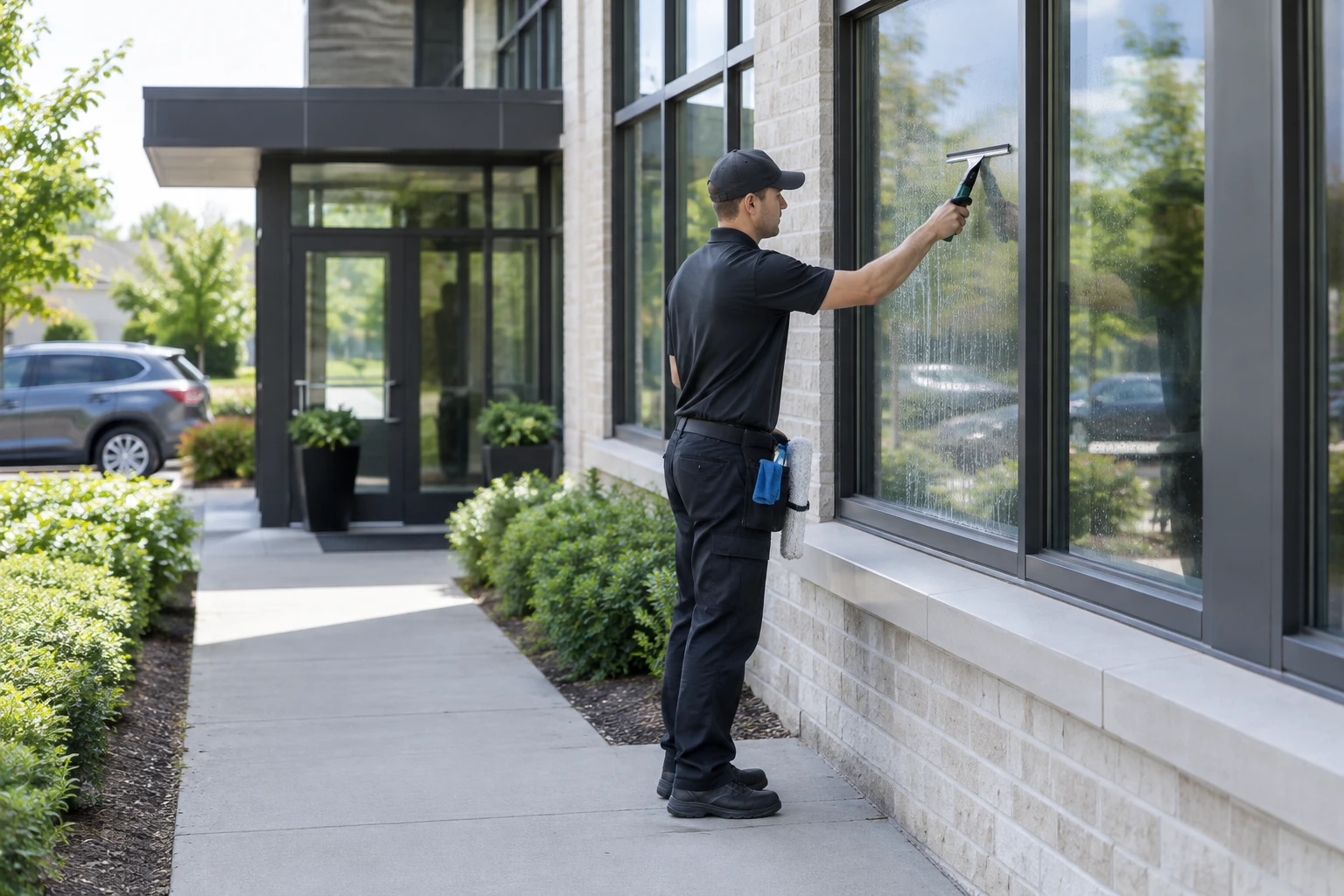
How long does professional window cleaning take? A typical home is often done in one to three hours by a crew, depending on size and access.
Time to Clean a Typical Home
A DIY job on an average home commonly takes four to eight hours once you add setup, washing, drying and packing away. Add flyscreens and tracks and it grows.
Scheduling and Recurring Plans
Recurring bookings take the planning out of it. Many households book seasonally, such as before summer entertaining or after storm season. Businesses often prefer regular schedules, and multi-site operators benefit from our national cleaning programs. If you run a business, you can request a commercial window cleaning quote in minutes.
How to Clean Windows Yourself (Step-by-Step)
If you are keeping the ground-floor job in-house, here is a simple method.
Tools and Supplies Checklist
- Squeegee: A quality channel and fresh rubber blade.
- Scrubber or microfibre applicator: For loosening dirt.
- Microfibre cloths: For edges and final polish.
- Bucket and extension pole: To avoid ladders.
Best DIY Cleaning Solution
What is the best homemade window cleaning solution? A few drops of dish soap in a bucket of warm water works well. A vinegar and water mix suits light films, but too much soap causes streaks.
Technique for Streak-Free Results
- Work in shade or on an overcast day.
- Dust the frame and sill first.
- Wash the glass with the solution.
- Pull the squeegee in a top-down S pattern or vertical strokes.
- Wipe the blade after every pass.
- Dry edges with a clean microfibre cloth.
How to Choose a Professional Window Cleaner
Is professional window cleaning worth it? Yes, when you choose the right provider. Look for proof, not promises.
Questions to Ask
- Are you fully insured, and can I see the certificate?
- Are your team members vetted and background-checked?
- Do you offer a satisfaction guarantee?
- What methods and products do you use?
Red Flags
Be wary of cash-only quotes with no details, no insurance proof, and vague answers about products or access methods.
What a Quote Should Include
A clear quote states the number of windows, whether it covers interior and exterior, and whether frames, sills, tracks and flyscreens are included. HiRange quotes are free, instant and no obligation, and every job is backed by our 100% money-back Happiness Guarantee.
The Hybrid Approach
Many homeowners split the work. Book a professional for exteriors and high windows, then handle interior touch-ups and ground-floor panes yourself between visits.
This keeps costs lower than a full service each time, while the hardest, riskiest and most visible glass gets expert attention. It also means your DIY effort stays safe and short.
Decision Checklist: Which Option Is Right for You?
| Criteria | Lean DIY | Lean Professional |
|---|---|---|
| Home height | Single storey | Two or more storeys |
| Window count | Few | Many or large panes |
| Budget | Tight, with spare time | Time-poor |
| Physical ability | Comfortable with tools | Limited mobility or balance concerns |
| Desired finish | Good enough | Sparkling, streak-free |
| Access | Easy, ground level | Skylights, high or awkward glass |
If most ticks fall in the right column, hire a professional. A mix points to the hybrid approach.

Conclusion
DIY can save cash on small, ground-level jobs, but ladders, time and streaks add up. Professionals deliver safer work, consistent results and real convenience, especially for multi-storey homes and commercial properties.
Ready for sparkling, streak-free windows? Get a free, no-obligation window cleaning quote today through our cost calculator, or see our local teams in Melbourne, Sydney, Brisbane and Adelaide. Your clearest view is one booking away.